
Epoxy Flooring vs. Polished Concrete, Which Is Right for Your Facility
There’s one question facility managers, maintenance managers, and property owners often ask: epoxy flooring vs polished concrete, which one is the better fit for their facility?
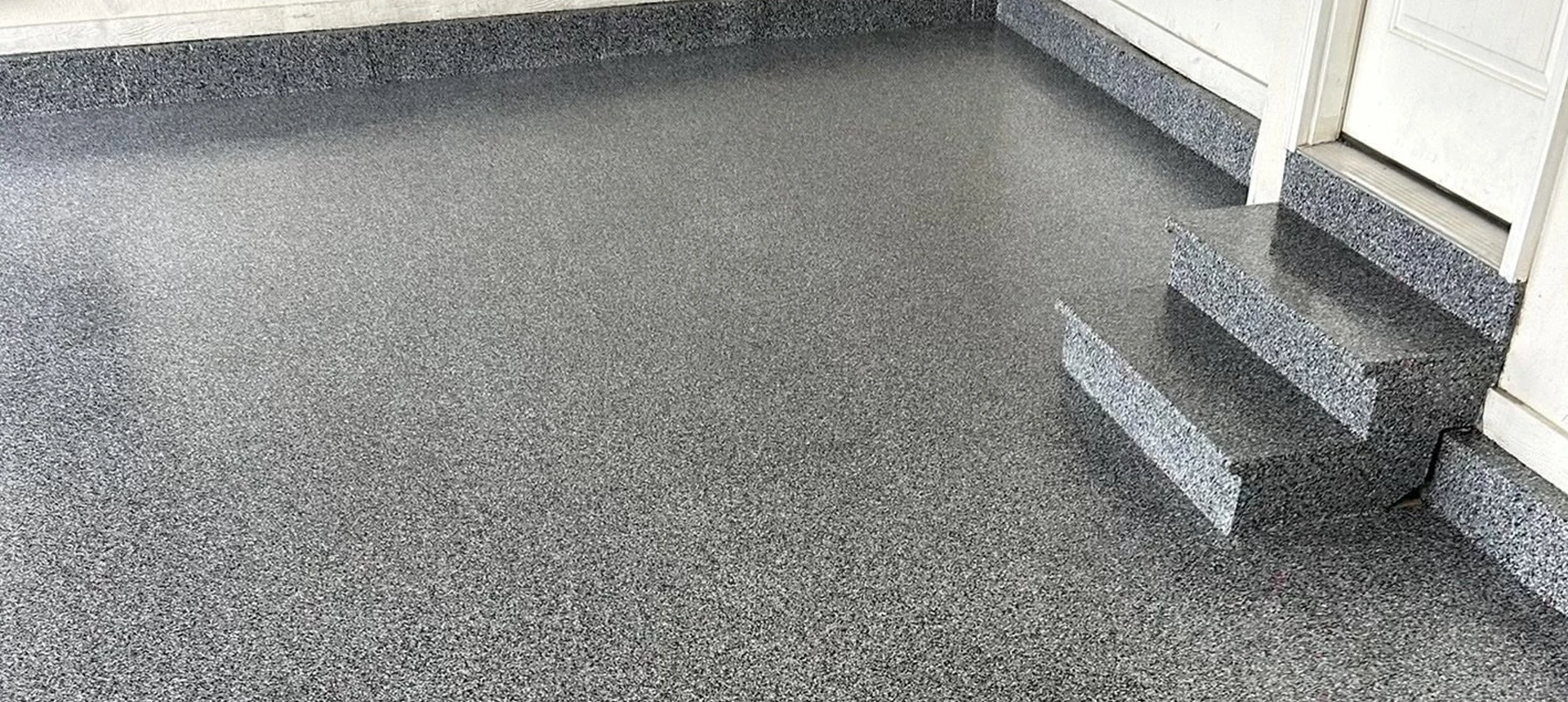
There’s one question facility managers, maintenance managers, and property owners often ask: epoxy flooring vs polished concrete, which one is the better fit for their facility?
Both are very good options for facilities and can be major upgrades over regular bare concrete. These types of floors are used all the time in production spaces, warehouses, retail, commercial kitchens, and many other types of commercial facilities around the Kansas City metro.
Although they are sometimes used in the same kinds of spaces, choosing one over the other for your facility can cost you in the long run when it comes to maintenance, performance, and long-term durability.
The truth is, there is not one right answer for every situation when it comes to flooring type. It often depends on that specific facility and its daily operations:
Epoxy flooring, often called a resinous coating, is a system that almost always gets applied over concrete. There are thousands of kinds of epoxy flooring installation systems, built up of:
The primary thing everyone should understand about epoxy is that it is a coating system sitting on top of concrete that bonds mechanically, besides MMA. It creates a finished surface that can have:
This is why epoxy is used in so many different commercial and industrial spaces, because it can be modified to fit any facility’s specific needs. Sherwin-Williams has a strong technical overview of epoxy flooring systems and chemistry here.
The difference between epoxy floors and polished concrete is that polished concrete is not a coating. It is the actual concrete being ground mechanically, grouted, given densifiers, and eventually polished and sealed to a specific finish.
As opposed to building a coating on top of the slab, polished concrete is the slab itself. The slab is transformed through grinding steps and densifier applications to create more strength and give it aesthetic appeal.
Polished concrete floors can be a very attractive look, ideal for spaces like offices, showrooms, schools, and similar environments. A lot of times, these polished concrete floors can also offer very low-maintenance durability.
Both of these systems offer durable solutions, but they can hold up differently.
Epoxy flooring can have great durability if the right system is built around the specific use case for the client, often through collaboration between epoxy coating professionals and their manufacturers. Systems designed for heavy-duty traffic in commercial and industrial facilities can hold up very well to things like forklifts, heavy impacts, and heavy daily use.
If the wrong system is installed, if a cheap system is used, or if improper prep is done, these floors can wear out or fail much quicker than they should.
Through the densifying application, polished concrete can be a strong option for places with moderate traffic, but polished concrete is only as good as the concrete slab itself.
Chemical resistance is a big draw for facility managers when it comes to epoxy flooring.
Resinous flooring topcoats are normally picked to resist certain chemicals, oils, or cleaners that are found within the facility, and they do a much better job with that than polished concrete. This is the reason you see so many epoxy systems in commercial kitchens, food and beverage areas, manufacturing facilities, washdown areas, and buildings with very strict sanitation guidelines.
Moisture and slab concerns can be a tricky subject.
Epoxy flooring can be a great option, but slab conditions still matter. If moisture issues in a slab are not addressed properly, the coatings can fail. This is why slab evaluation is so important when choosing a contractor, especially one who actually tests the concrete with ICRI-certified technicians.
Surface prep is also a big part of long-term performance. The ICRI has a solid reference on surface preparation for coatings here, and ASTM F2170 is the standard reference for in situ relative humidity testing in concrete slabs.
Since polished concrete is not a monolithic floor coating, it is able to avoid some possible moisture issues down the road.
Epoxy flooring and polished concrete can both have finishes with slip resistance added based on the use case for the space.
Resinous flooring systems can use aggregates to enhance slip resistance and texture. This is very important in kitchens, washdown areas, car washes, and facilities where there is constantly a wet environment.
Polished concrete is great for dry spaces, but it may not be the best fit if extra traction is needed in certain environments.
Both of these flooring systems are great in terms of cleaning, maintenance, and typically long life spans. This is one of the main reasons both of these options are so well liked.
Polished concrete can be a great option in low-maintenance facilities that do not deal with constant contamination, harsh chemicals, and similar conditions. That is why it is such an appealing option for warehouses, offices, schools, and retail settings.
Epoxy flooring also offers very easy-to-clean floors with generally little maintenance. The type of maintenance depends on what type of system is installed in the facility.
Sherwin-Williams also has a helpful page on general flooring maintenance and cleaning here.
In terms of chemical resistance, epoxy flooring is your best option because it does not allow contaminants to get through cracks or grout lines.
In terms of appearance, epoxy flooring can go from a plain solid color option where only performance is needed, all the way to metallic marble finishes and multi-color quartz blends that give strong aesthetic appeal without giving up durability.
Polished concrete usually gives a very clean, rustic look. These floors are not perfectly uniform because every slab has its own personality and characteristics, which many clients love.
Resinous or epoxy flooring is normally a better fit when:
If your facility needs help deciding between systems, you can also reach out through our contact page here.
Pick polished concrete if you need these types of solutions for your facility:
Not all of these options are great for every facility. The best option is the one that matches the building, its traffic, the daily use, and the long-term expectations of the client.
That is why we stress that deciding which finish a facility needs should not be made because of a brochure or a quick number.
If you are deciding between epoxy flooring and polished concrete for your facility, it is often best to look at your specific use case, current slab conditions, and what the building needs the floor to do on a daily basis.
If you are trying to decide between epoxy flooring and polished concrete for your Kansas City facility, reach out to Good Boy Coatings. We can help you look at the building, the slab, and the daily use so you can make the right choice the first time.